Best Heart Doctor in Bhopal | Dr Chandra Kumar Singh
Finding the Best Heart Doctor in Bhopal is an important decision when you are concerned about chest pain, heart disease, high blood pressure, irregular heartbeat, or other cardiac problems. A qualified heart specialist can help identify heart-related conditions early and recommend the right tests and treatment for your needs. Dr Chandra Kumar Singh, a cardiologist in Bhopal, provides comprehensive cardiac care and treatment for a range of heart conditions. Dr Chandra Kumar Singh, a cardiologist in Bhopal, provides comprehensive cardiac care and treatment for various heart conditions.
Maybe it’s happened a few times this month. Maybe there’s also a dull heaviness in your chest that comes and goes, or your left arm feels a little odd after a long day. You tell yourself it’s stress, or age, or just needing more sleep. But somewhere in the back of your mind, a small voice is asking — should I get my heart checked?
If you’re searching for a heart specialist doctor in Bhopal, you’re probably already past the “maybe it’s nothing” stage. And that’s a good instinct to trust.
Quick Answer
The best heart doctor in Bhopal for your situation is one who takes time to actually listen to your symptoms, orders the right tests instead of unnecessary ones, and explains your heart condition in language you understand — not just medical shorthand. Dr Chandra Kumar Singh, Best cardiologist in Bhopal, focuses on this kind of clear, patient-centred approach for conditions ranging from routine heart checkups to angioplasty and angiography.
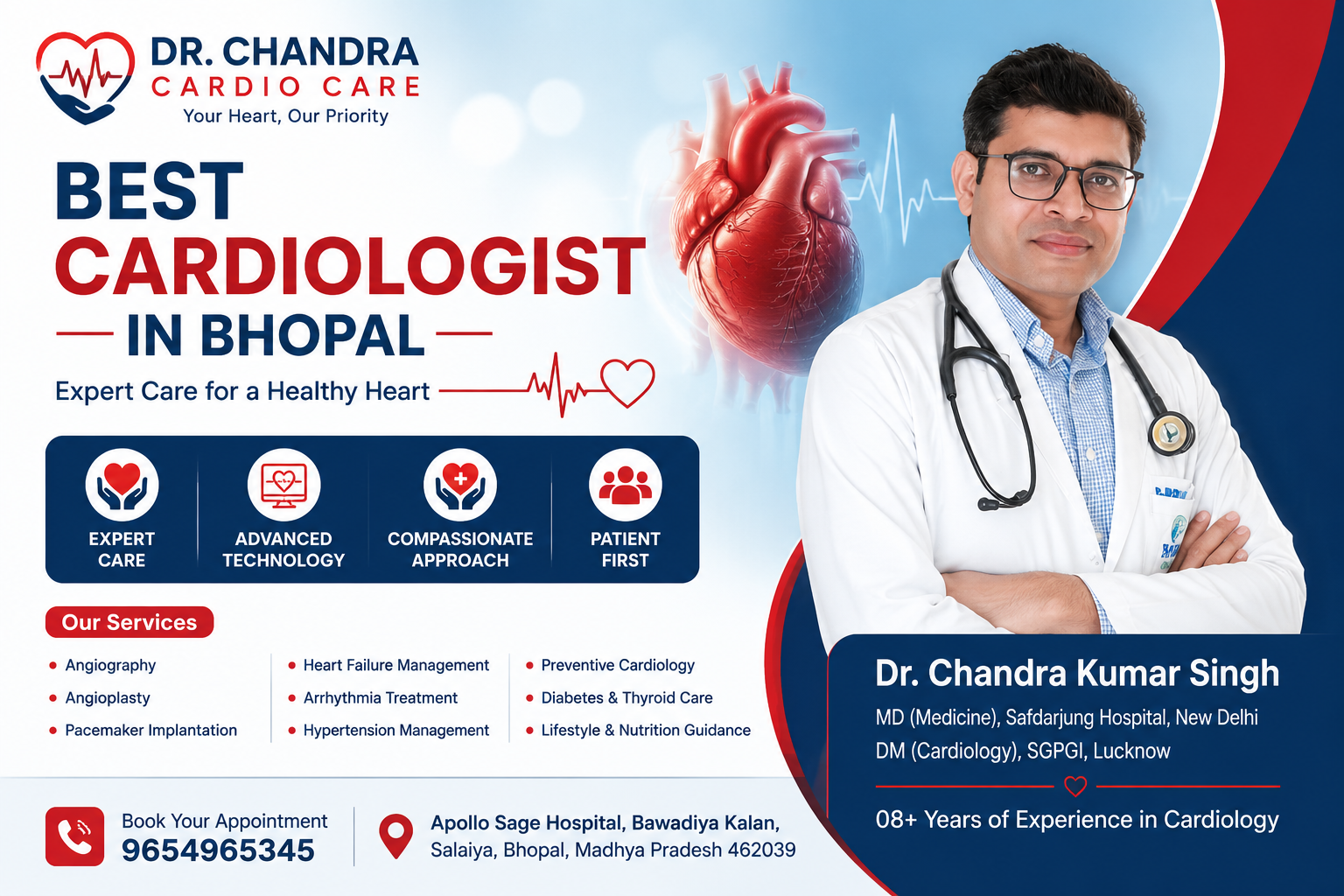
What Does a Cardiologist Actually Do?
A cardiologist is a doctor trained specifically in the heart and blood vessels — not general health, just this one organ system in depth. That’s an important distinction, because heart problems can look like other things. Acidity can mimic chest pain. Anxiety can mimic palpitations. A good cardiologist knows how to tell the difference.
Cardiologists diagnose and manage conditions like blocked arteries, irregular heartbeat, high blood pressure’s effects on the heart, heart valve issues, and heart failure. Some, like Dr Chandra Kumar Singh, also perform procedures such as angiography (to see inside your blood vessels) and angioplasty (to open a blocked artery using a small balloon or stent).
Waise, not every chest discomfort needs a cardiologist. But it’s better to get it checked and be told it’s fine, than to ignore it and find out later it wasn’t.
Common Symptoms People Ignore for Too Long
In my clinical practice, I’ve noticed a pattern — patients often wait weeks, sometimes months, before coming in, because the symptoms felt “manageable” or came and went. That delay can matter.
Here are signs worth paying attention to:
- Chest pain, tightness, or pressure — even if it goes away after resting
- Breathlessness during activities that never used to tire you before
- Unexplained fatigue that doesn’t improve with rest
- Palpitations, or a feeling that your heart is skipping or racing
- Swelling in the ankles or feet by evening
- Dizziness or a cold sweat with no clear reason
None of these confirm a heart problem on their own. But together, or if they repeat, they’re your body’s way of asking you to get checked.
Causes and Risk Factors You Should Know
Heart disease rarely shows up overnight. It usually builds over years, quietly.
Diabetes and high blood pressure are two of the biggest contributors — and Bhopal, like many growing cities, has seen a rise in both due to shifting food habits and increasingly sedentary routines. Add to that high-stress jobs, irregular sleep, and smoking, and the risk stacks up faster than people realise.
Family history plays a role too. If a parent or sibling had a heart attack before age 55, your own risk goes up, even if your reports currently look normal.
Do you sit at a desk for eight-plus hours a day and barely walk otherwise? That single habit, over years, does more damage than most people expect.
When Should You See a Heart Specialist in Bhopal?
Not every symptom needs an emergency visit, but some absolutely do.
See a doctor urgently if you have sudden, severe chest pain, pain radiating to your jaw or left arm, sudden breathlessness, or fainting. Don’t wait this out at home.
Book a routine consultation if you have risk factors like diabetes, high BP, or a family history of heart disease — even without symptoms. Preventive checkups catch problems early, when they’re easiest to manage.
Bhopal’s weather shifts — from sharp summer heat to cold winter mornings — can also affect blood pressure and place extra strain on the heart, especially in people over 45. It’s one more reason not to skip that annual check.
How Heart Conditions Are Diagnosed
Diagnosis usually starts simply and only goes further if needed. A basic ECG checks your heart’s electrical rhythm in minutes. An echocardiogram (echo) uses ultrasound to look at how well your heart is pumping. Blood tests check cholesterol and other markers.
If these suggest a blockage, the next step may be angiography — a procedure in which a special dye is injected to make blood vessels visible on X-ray, showing exactly where and how much narrowing exists. If a significant block is found, angioplasty can often treat it in the same sitting, restoring blood flow using a stent.
It sounds intimidating on paper. In practice, most patients are surprised at how quickly it’s over.
Not sure if your symptoms need attention? A short consultation can give you clarity. Book an appointment with Dr Chandra Kumar Singh to get your heart health properly assessed.
Treatment Options for Heart Disease
Treatment depends entirely on what’s found — there’s no single approach that fits everyone.
For early-stage risk factors, medication and lifestyle changes are often enough to prevent progression. For blocked arteries, angioplasty with stenting is a common, minimally invasive option. In more complex cases, bypass surgery may be recommended, though this is usually done in coordination with a cardiac surgery team.
What matters most is getting an accurate diagnosis first. Treating symptoms without understanding the underlying cause rarely works long-term.
Prevention: What Actually Helps
Generic advice like “eat healthy” doesn’t help anyone change behaviour. Here’s what’s more specific and practical:
Cut down on visible oil and fried snacks — not eliminate fat, just reduce the deep-fried, repeatedly heated oil that’s common in street food. Walk briskly for 30 minutes, five days a week; this alone measurably improves heart function over months. Get your blood pressure checked every 6 months after age 40, even if you feel fine — hypertension often has no symptoms until it causes damage. Limit added salt in home cooking, especially if you already have high BP. And if you smoke, quitting is the single most impactful thing you can do for your heart, full stop.
Sleep matters more than people realise, too. Consistently getting less than 6 hours a night has a measurable link to heart strain over time.
About Dr Chandra Kumar Singh — Cardiologist in Bhopal
Dr Chandra Kumar Singh practices as a Cardiologist in Bhopal, with a clinical focus on diagnosing and managing heart disease, including procedures like angiography and angioplasty. His approach centres on taking a thorough patient history, explaining findings in plain language, and recommending the least invasive effective option before considering more complex procedures.
Patients often come in anxious, having read conflicting information online. Part of the consultation, in Dr Singh’s experience, is simply helping people understand what their reports actually mean — and what they don’t.
Frequently Asked Questions
1. How do I know if my chest pain is heart-related or just gas?
Heart-related pain often feels like pressure or tightness, may spread to the arm or jaw, and can worsen with exertion. Gas pain usually shifts position and eases with burping or antacids. When in doubt, get it checked.
2. Is angioplasty a major surgery?
No, angioplasty is a minimally invasive procedure done through a small puncture, usually in the wrist or groin, without open-heart surgery. Most patients go home within a day or two.
3. At what age should I start regular heart checkups?
If you have no risk factors, screening from age 40 is reasonable. With diabetes, high blood pressure, obesity, or a family history, checkups should start earlier, even in your 30s.
4. Can stress alone cause heart problems?
Chronic stress contributes to high blood pressure and unhealthy coping habits like smoking or poor sleep, which do affect heart health over time. It’s rarely the sole cause, but it’s a real contributing factor.
5. Does Dr Chandra Kumar Singh treat both diagnosis and procedures like angiography?
Yes. Dr Chandra Kumar Singh, a Cardiologist in Bhopal, handles the full spectrum from initial evaluation and diagnostic testing through procedures such as angiography and angioplasty when needed.
Choosing the best heart doctor in Bhopal isn’t about finding someone with the most impressive-sounding title. It’s about finding a cardiologist who listens carefully, tests appropriately, and communicates clearly at every step.
If you’ve been noticing symptoms and putting off that visit — this is your reminder that early evaluation almost always leads to simpler treatment.
Ready to get your heart checked properly? Schedule your visit with Dr Chandra Kumar Singh, Cardiologist in Bhopal, today and take that first step toward clarity.
Medical Disclaimer:
This article is for general educational purposes only and does not constitute medical advice, diagnosis, or treatment. Please consult Dr Chandra Kumar Singh or a qualified healthcare provider for evaluation specific to your health condition.